Pakistan’s Masterstroke: Kashmir in the Islamabad Talks Spotlight
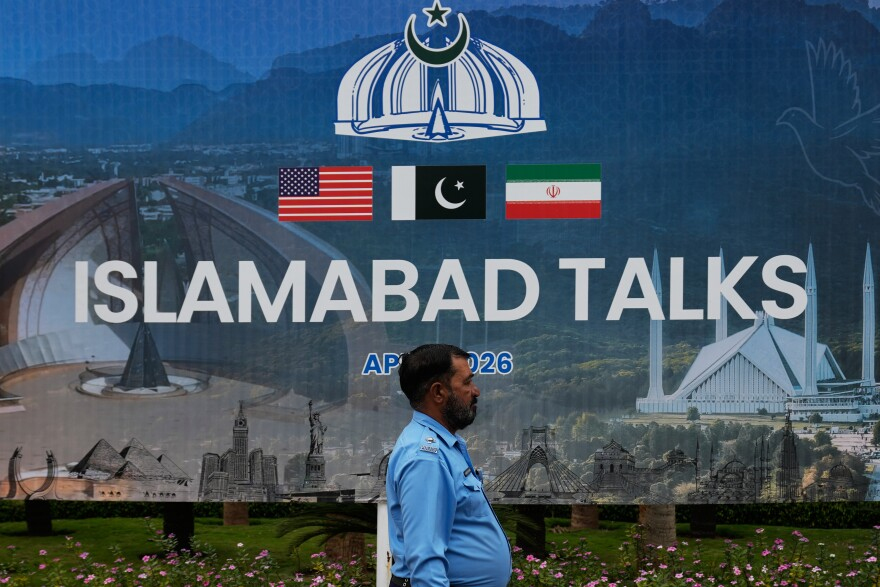
In the full glare of the April 2026 Islamabad talks, where Pakistan hosted direct US-Iran negotiations that drew the world’s cameras, the host nation seized a moment that many quickly noticed. Four senior figures at the very centre of Pakistan’s negotiating team carried clear Kashmiri ethnic roots: Prime Minister Shehbaz Sharif, Foreign Minister Ishaq Dar, Defence Minister Khawaja Asif, and spokesperson Andrabi.
The formal agenda of the talks revolved around nuclear tensions, security in the Strait of Hormuz and the search for a fragile ceasefire framework. Yet something subtler unfolded alongside these negotiations. Without mentioning the Line of Control or Article 370 even once, Islamabad quietly placed its core national doctrine, Kashmir as Pakistan’s “jugular vein”, into the global spotlight.
Diplomacy often works through signals rather than declarations. During the Islamabad talks, Pakistan understood that perfectly.
This was never a coincidence but deliberate optics, timed at a moment when Pakistan was presenting itself before the world as a responsible diplomatic mediator. By fielding a negotiating team so visibly rooted in Kashmiri identity, Islamabad projected a message that required no formal announcement. In Pakistan’s narrative, Kashmiris are not outsiders or a population to be managed from a distance. They occupy positions at the centre of political power, even within a system where the military remains deeply influential.
The symbolism was subtle, but its implications travelled far beyond the negotiating room.
India’s Post-370 Kashmir: A Domestic Victory, A Growing Unease
To understand why this moment mattered, one must place it beside what unfolded inside India after the 2019 abrogation of Article 370. At the time, the move was presented as a historic step toward full national integration. The promise was a “Naya Kashmir” built on development, opportunity and a political order freed from the distortions of the past.
Yet the policy framework that followed has produced a far more uneasy reality, particularly in the Kashmir Division, which according to the 2011 Census remains the demographic majority of the Union Territory.
One of the most contentious shifts came through the restructuring of reservation policies in education and government employment. Quotas have now expanded to nearly 60 per cent, significantly altering the competitive landscape for public sector jobs. While framed as social justice, the policy has produced a growing perception in the Valley that almost every group now enjoys reservation benefits except the ethnic Kashmiri youth who form the core population of the Kashmir Division.
The imbalance becomes sharper when viewed through regional distribution. Despite Kashmir holding the larger share of the population, categories concentrated in the Jammu Division account for roughly 82 per cent of the reservation share across several segments overall. This happens even when Census 2011 data showed the literacy rate of Kashmiri division is far lower than Jammu. For many young people in the Valley, the result feels less like inclusion and more like a quiet reordering of opportunity.
For thousands of educated but unemployed Kashmiri youth, the system that once promised mobility through merit increasingly feels distant. The ladder of opportunity, they believe, has not been removed but subtly shifted away to favor certain vote-bank.
Warnings from Within Kashmir
These concerns were not raised in hindsight. Mainstream political leader Sajad Lone warned early that policies perceived as systematic sidelining could recreate the same political frustrations that once erupted after the 1987 elections, widely seen as a turning point in Kashmir’s modern unrest.
His argument was simple. When people begin to feel the system is stacked against them, alienation rarely arrives suddenly. It grows quietly through everyday experiences of exclusion.
Security analysts and civil society voices have echoed the same concern. Stability in Kashmir cannot rely indefinitely on administrative control alone. It also depends on whether young people believe the political and economic system still has a place for them.
Yet these warnings have struggled to find space in India’s larger national conversation. The policy delivered a victory that was purely for domestic consumption and carried no meaningful effect globally. It was a victory that may yet prove costly to the very way India had framed the Kashmir issue for decades.
The Signal Pakistan Sent
Seen against this backdrop, Pakistan’s optics during the Islamabad talks acquire a different meaning.
The choice of negotiators was not accidental. By placing leaders of Kashmiri origin at the centre of negotiations watched across the world, Islamabad subtly reinforced its long-standing narrative that Kashmiris remain politically visible and influential within its state structure while throwing a strong punch back at India.
Diplomacy rarely operates only through official statements. Often it works through imagery and perception. Pakistan has been able to win in diplomacy and optics in Islamabad talks.
When international observers watch Kashmiri faces representing Pakistan during high-stakes global negotiations, the message is difficult to ignore. The dispute, Pakistan suggests, is not simply about land but about people who remain part of its political imagination.
For India, this raises uncomfortable but necessary questions which only few are willing to answer.
What is the long-term vision for Kashmir within the Indian Union? Is the region meant to remain a vibrant part of India’s plural identity, where Kashmiri language, culture and ethnicity are recognised as central elements of national diversity? Or is Kashmir gradually being treated primarily as territory that must be administered and secured, regardless of how its youth interpret those policies?
Too often the national conversation slips into familiar patterns of political applause and partisan outrage, where governance becomes a theatre of cheering allies and booing opponents, the policy which many philosophers call “Hurrah boo”. Such politics may generate momentary excitement, but it rarely produces durable strategy which strong nations rely on.
Beyond Optics: Turning Kashmir into India’s Strength
If there is a path forward, it lies not in sharper rhetoric but in deeper reflection. Kashmir’s greatest strength has always been the shared civilisational space of its people. Kashmiri Pandits and Kashmiri Muslims share the same ethnic roots, the same language and a cultural memory shaped by centuries of coexistence, scholarship and intellectual exchange. That shared inheritance is not a fault line. It is a bridge, if used properly.
Reducing it to a Hindu-Muslim political instrument, to gain in mainland electoral battles only weakens India’s own moral and strategic position. A nation of India’s civilisational depth should treat Kashmir’s layered identity as a source of strength, not as material for short-term vote bank mobilisation.
The real task is to mend fault lines rather than widen them. Encouraging genuine dialogue between Pandit communities and Kashmiri Muslims, restoring trust where it was broken, and redeveloping that trust. Matter of fact is both communities have suffered due to Pakistan sponsored terrorism, they have tried to severe ties of Kashmiri ethnicity who share a common culture and our Job as a nation must be to re-unite them back.
Reservation policies needs to be amended for social justice and not for social alienation of Kashmir division. We can Ensure that Kashmiri youth feel included in the institutions of the Indian state, that would do far more for national unity than symbolic victories or administrative proclamations.
At the same time, India must recognise that geopolitics today is shaped as much by perception as by power. During the Islamabad talks, Pakistan demonstrated how quietly crafted symbolism can influence the global narrative on Kashmir without uttering a single confrontational word.
India’s response cannot simply be rhetorical. It must be structural and sincere. Moving beyond narrow political calculations and treating Kashmir as an integral part of India’s plural identity would not only counter such narratives but strengthen the country from within.
Great nations grow stronger when they heal their internal fractures rather than exploit them. If India chooses to see Kashmir not as a problem to be managed but as a society to be embraced, the region can become a powerful example of reconciliation and national confidence.
In the end, the question is simple. Will Kashmir remain a stage for political contest, or can it become the bridge that helps India build a stronger and more united future?